St Mary's After Dark
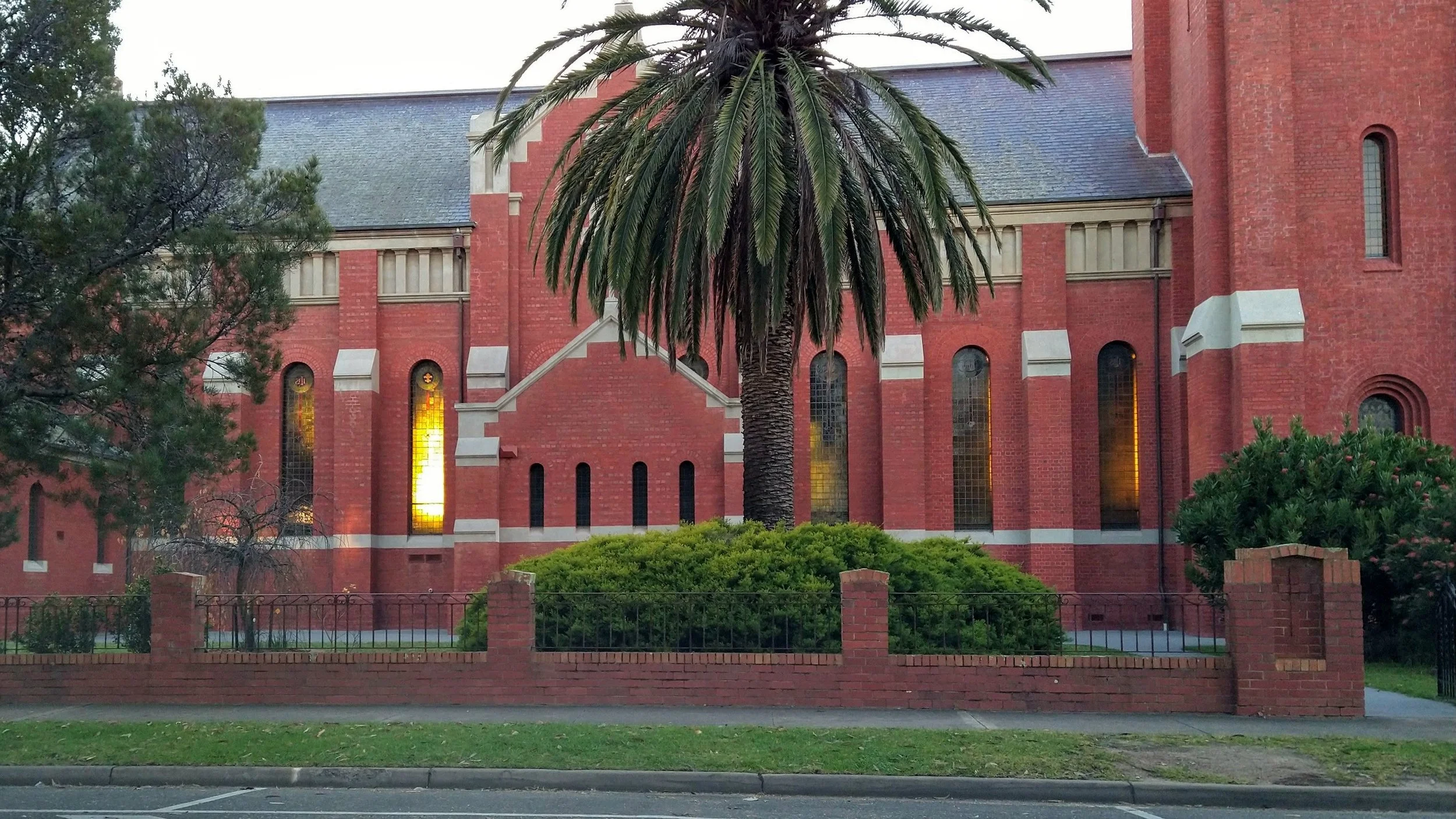
Most days I end up in a parked car in Pyke Street with a coffee, and most days I watch the same small ritual play out across the road. A car pulls up outside St Mary's, someone gets out, takes two or three quick shots on a phone, and drives off. The church gets thousands of visitors a year doing exactly that. Fair enough: they're passing through, and a photo of somewhere is better than no photo at all. But it's one of the most photographed buildings in Bairnsdale, and almost nobody who photographs it has seen it after dark.
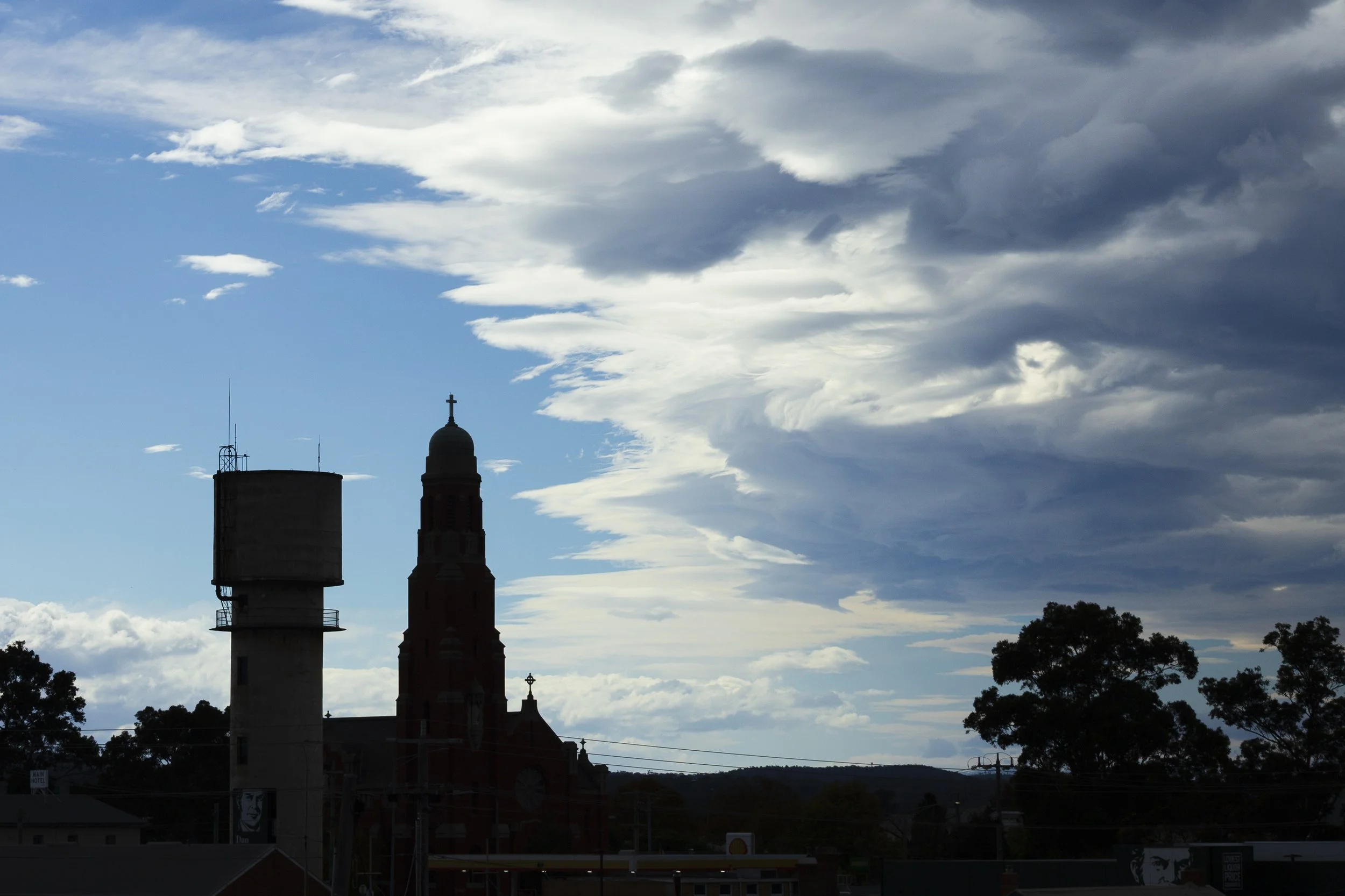
I've photographed it plenty during the day too, and not just the obvious shot. I've looked straight up past the palm tree towards the statue and the cross, caught morning light coming through the stained glass, and shot it from the railway footbridge for a different angle on the bell tower. They're fine photos, but none of them have what's there at night.
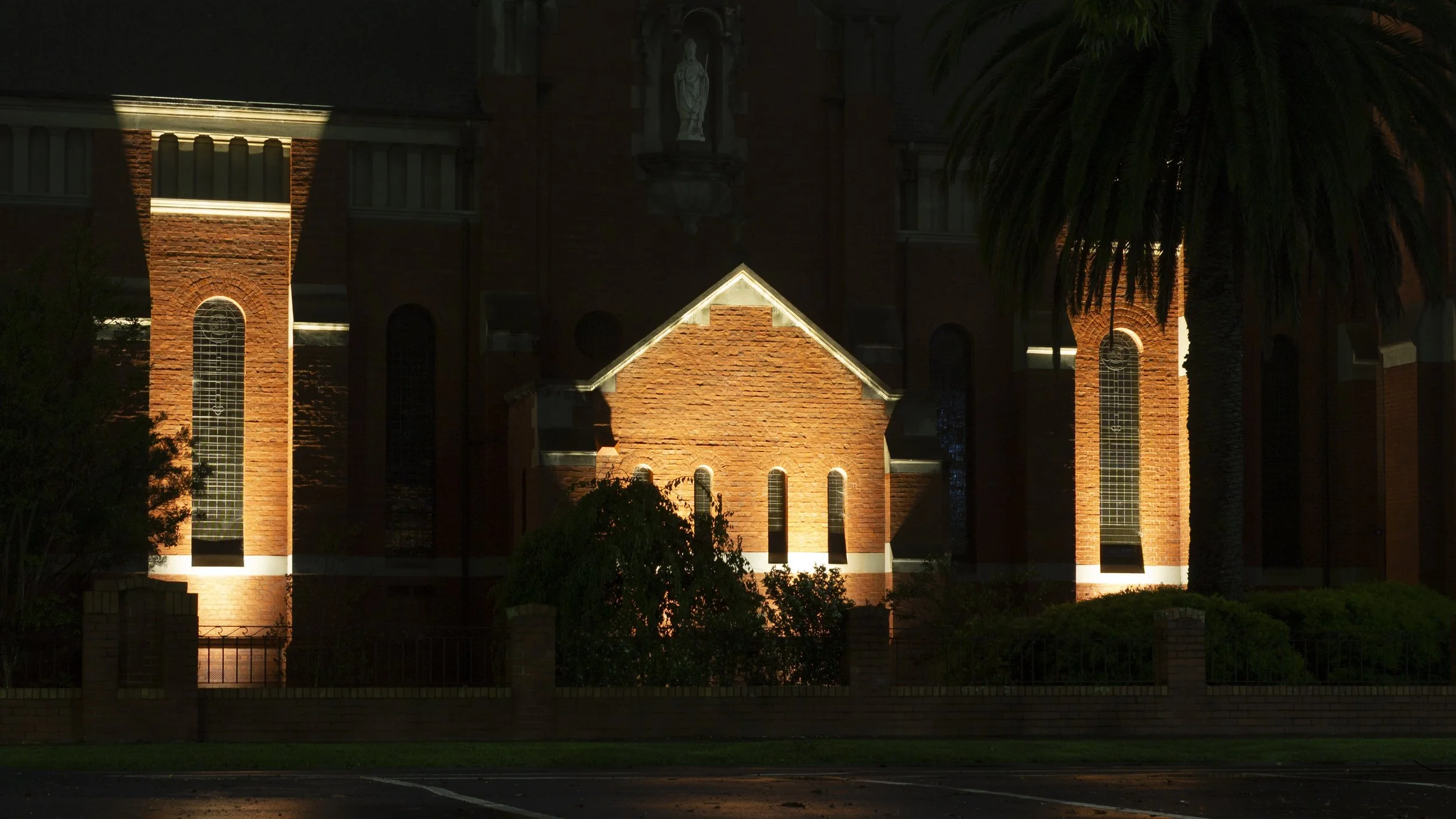
I went down at around 4am one winter's morning in 2026. It had been raining earlier in the night, the road was still wet, and it was cold. The town was empty, apart from a few cars pulling into the McDonald's next door, some with fishing boats in tow. I worked the building for about 30 minutes, starting with a wide shot of the whole side of the church and moving in tighter and tighter, ending on a single lit window arch that reads almost as an abstract shape rather than part of a building.
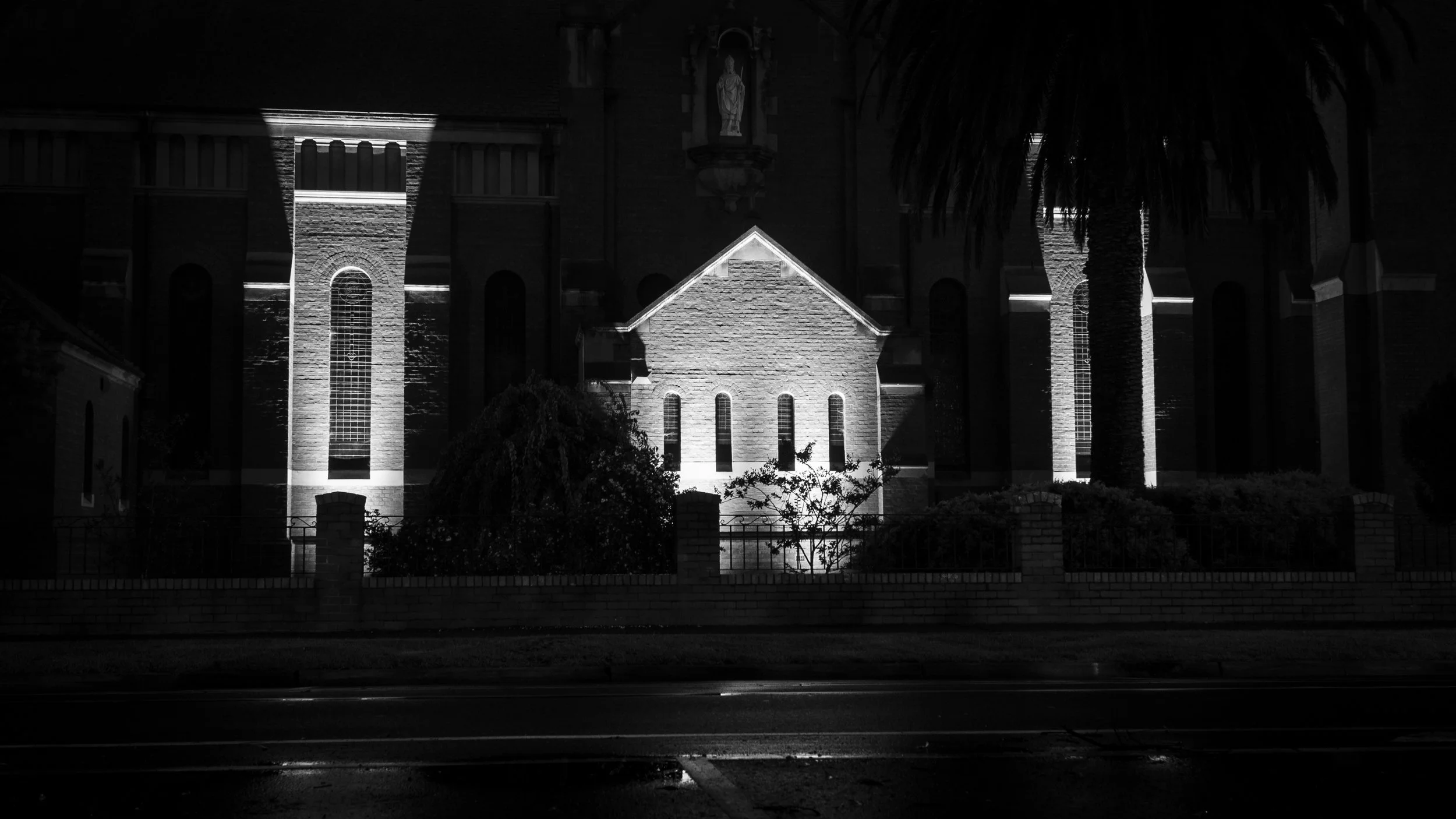
I shot some of the frames in both colour and black and white. The warm light on the brick is part of the story in colour, but once I had them both open in Lightroom, the mono version was simply the one that looked right. Without the colour, the geometry of the brickwork and the shadow lines do the talking.
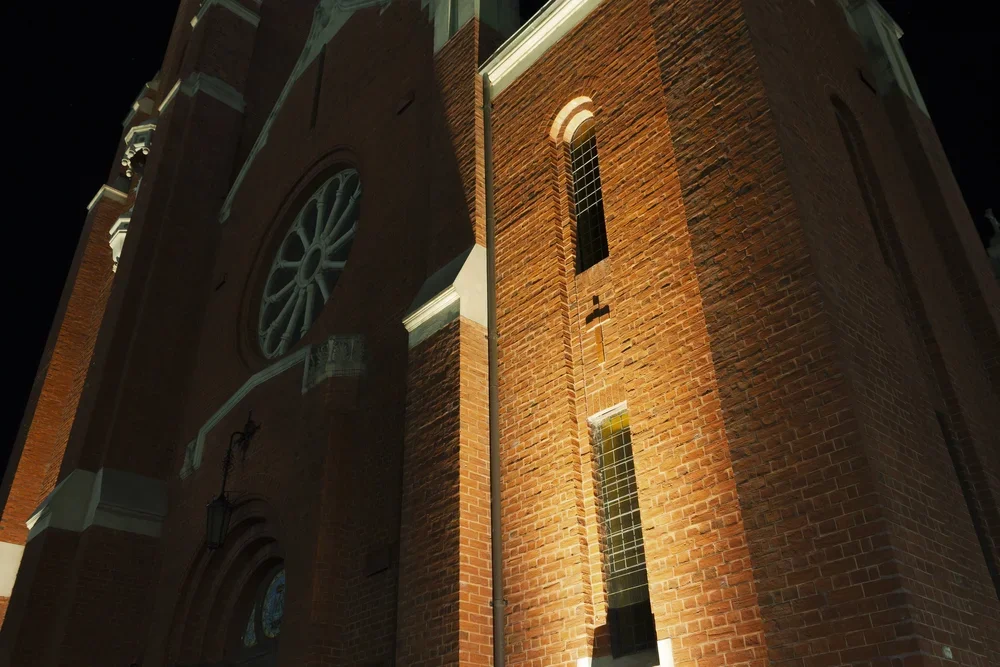
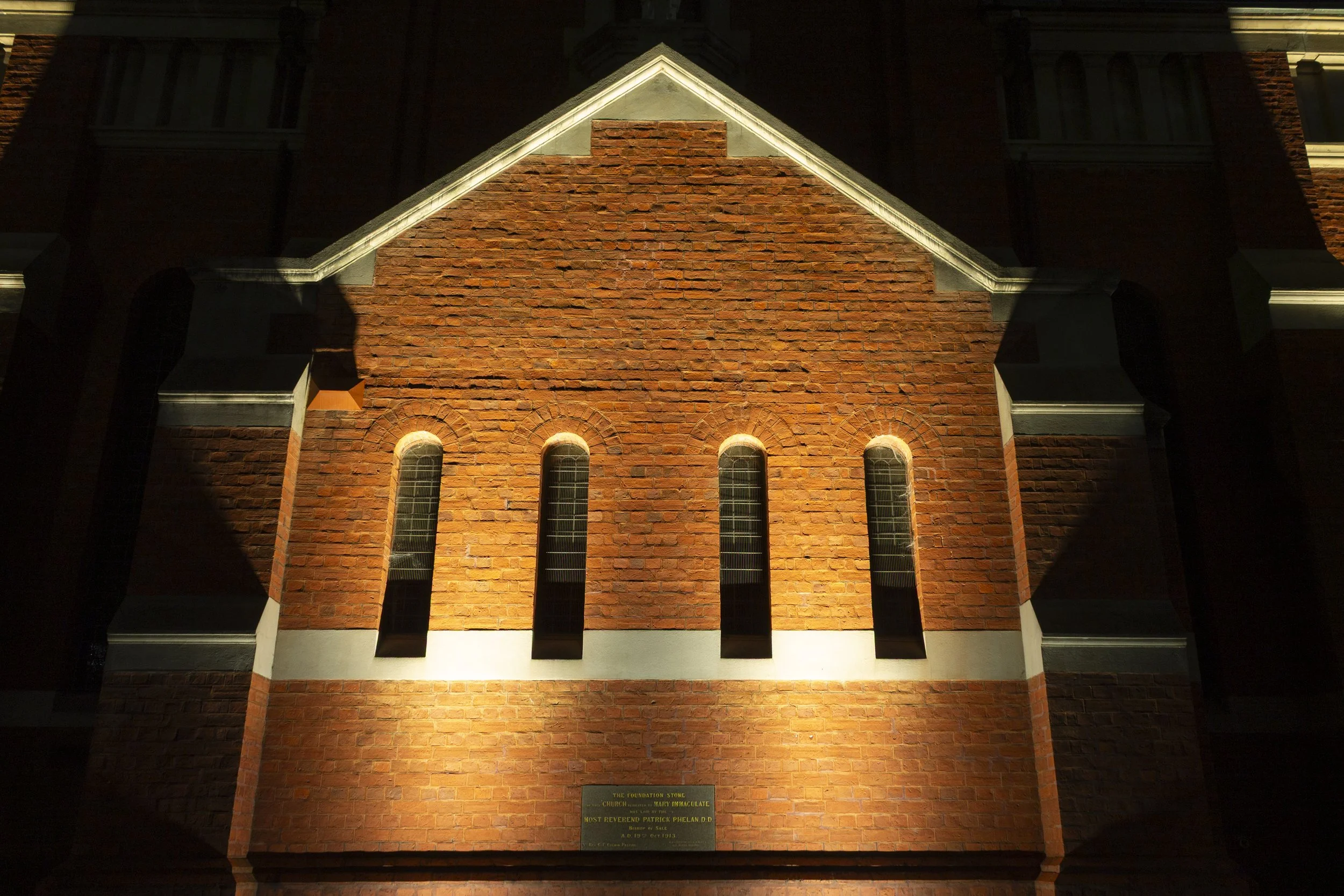
The reason it looks so different at night is the lighting itself. The lights are set into the ground at the base of the walls and point upwards, which is the opposite of how sunlight falls. Shadows run up the building instead of down. The edges of the window recesses and the stepped brick arches catch light the sun never reaches. And because the light skims up the wall at such a low angle, every brick shows its texture. You simply can't get that in daylight.
The foundation stone sits just below those four arched windows, and it's easy to miss even in daylight. It was laid on 19 October 1913 by the Most Reverend Patrick Phelan, Bishop of Sale, with A.A. Fritsch as architect and A.A. Meyer as builder. That's more than a century of brickwork, and it's only after dark, with the light running up it, that you really see it.
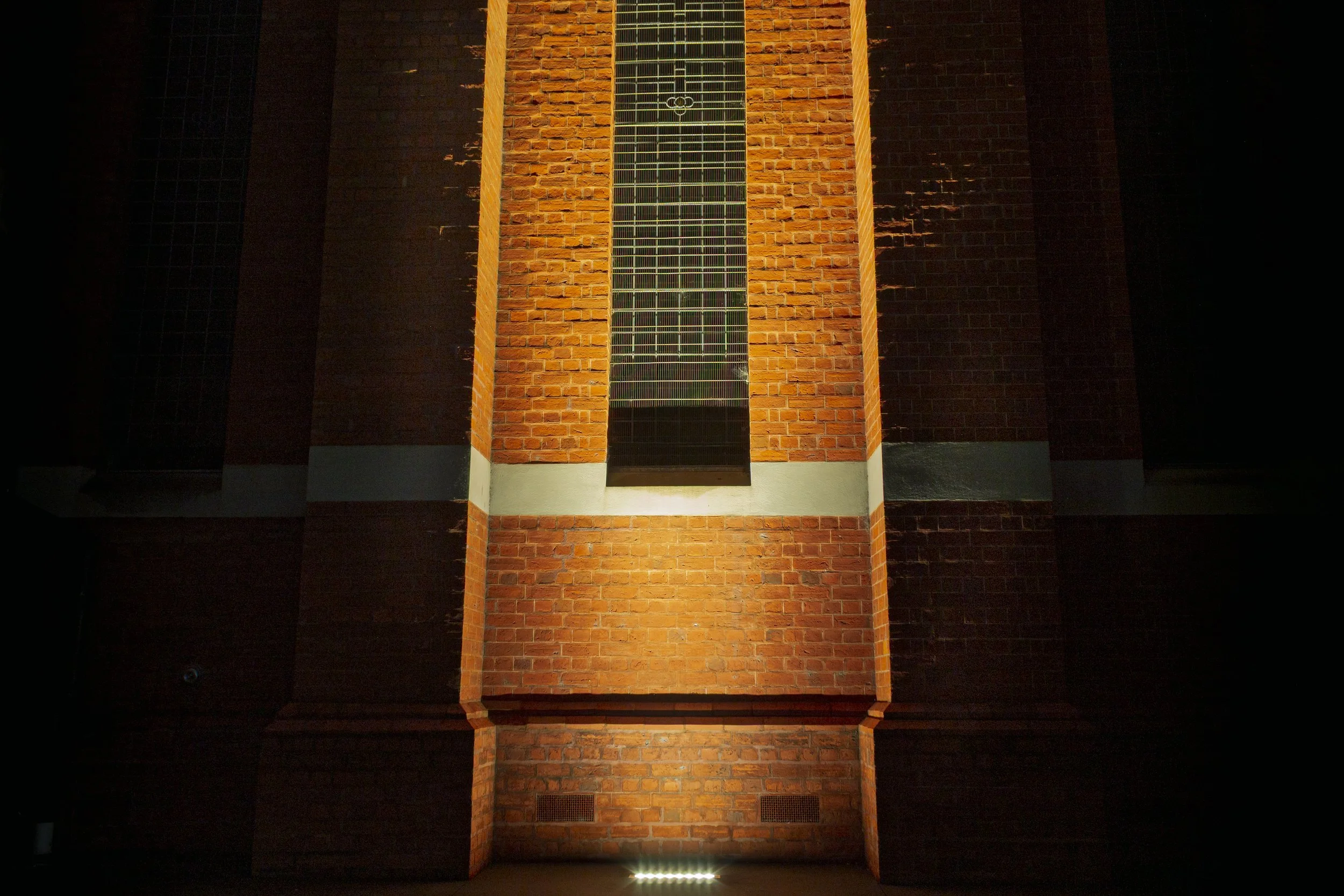
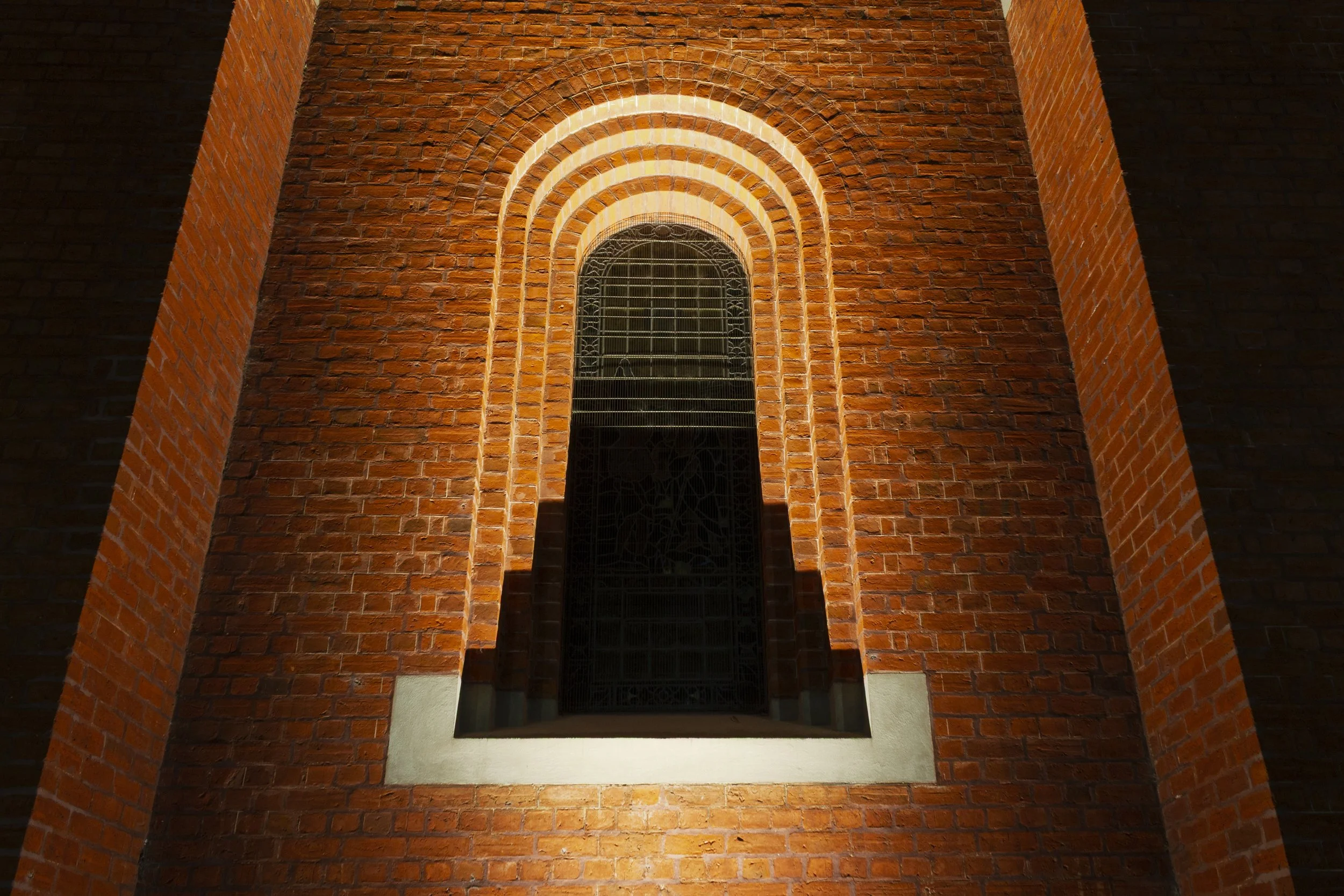
What struck me working it this way is that a building I look at almost every day gives up something completely different once you're willing to stand there in the dark and actually look. That's most of what these night sessions are for me. It isn't about finding new places. It's about finding a reason to stop at the ones I already know too well to really see.
If you want to try it yourself: the lights come on after dark, but the time to go is before dawn, when the street is empty and there are no parked cars in the way. Bring a tripod, because you'll be working with long exposures. And if you've only ever done the quick stop on the way through, it's worth coming back once at night.