The Glenaladale Weir: Four Visits, Three Cameras
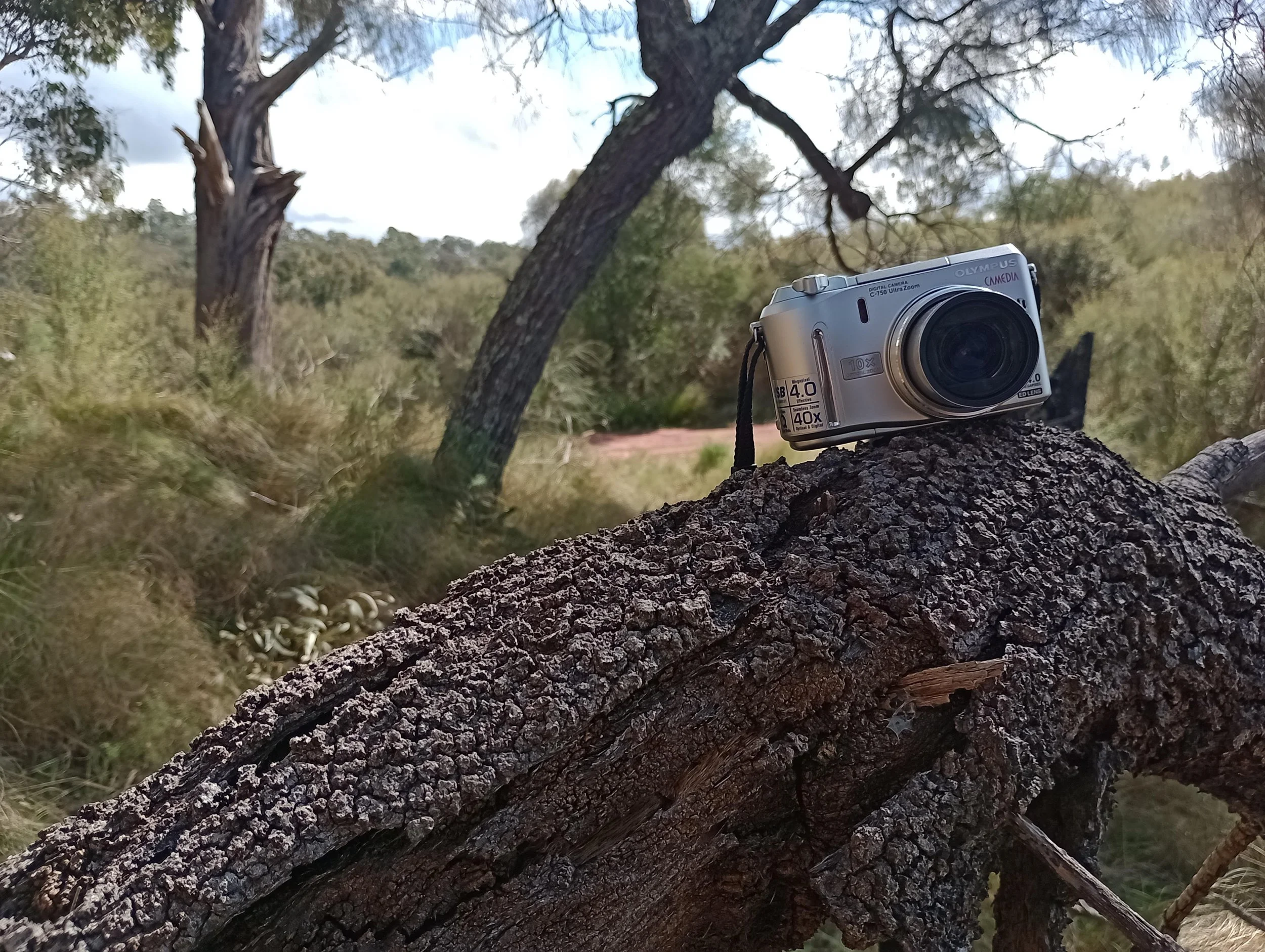
There's a spot on the Mitchell River near Glenaladale I keep going back to: the Glenaladale Weir, which a lot of people simply call the Old Weir. Looking back through my archive, I've photographed it on four visits with three different cameras, and the river has looked different every time.
The weir has a story of its own. Work began in 1890, after a run of dry years had left crops failing across the district. The plan was to raise the river and channel its water out to the farming districts of East Gippsland. Floods damaged it, the repairs were never made, and the scheme was abandoned. A Royal Commission looked into it in the mid-1890s. What's left today are the stone walls on either bank and great blocks of masonry sitting in the river.
September 2022: the Olympus and a phone
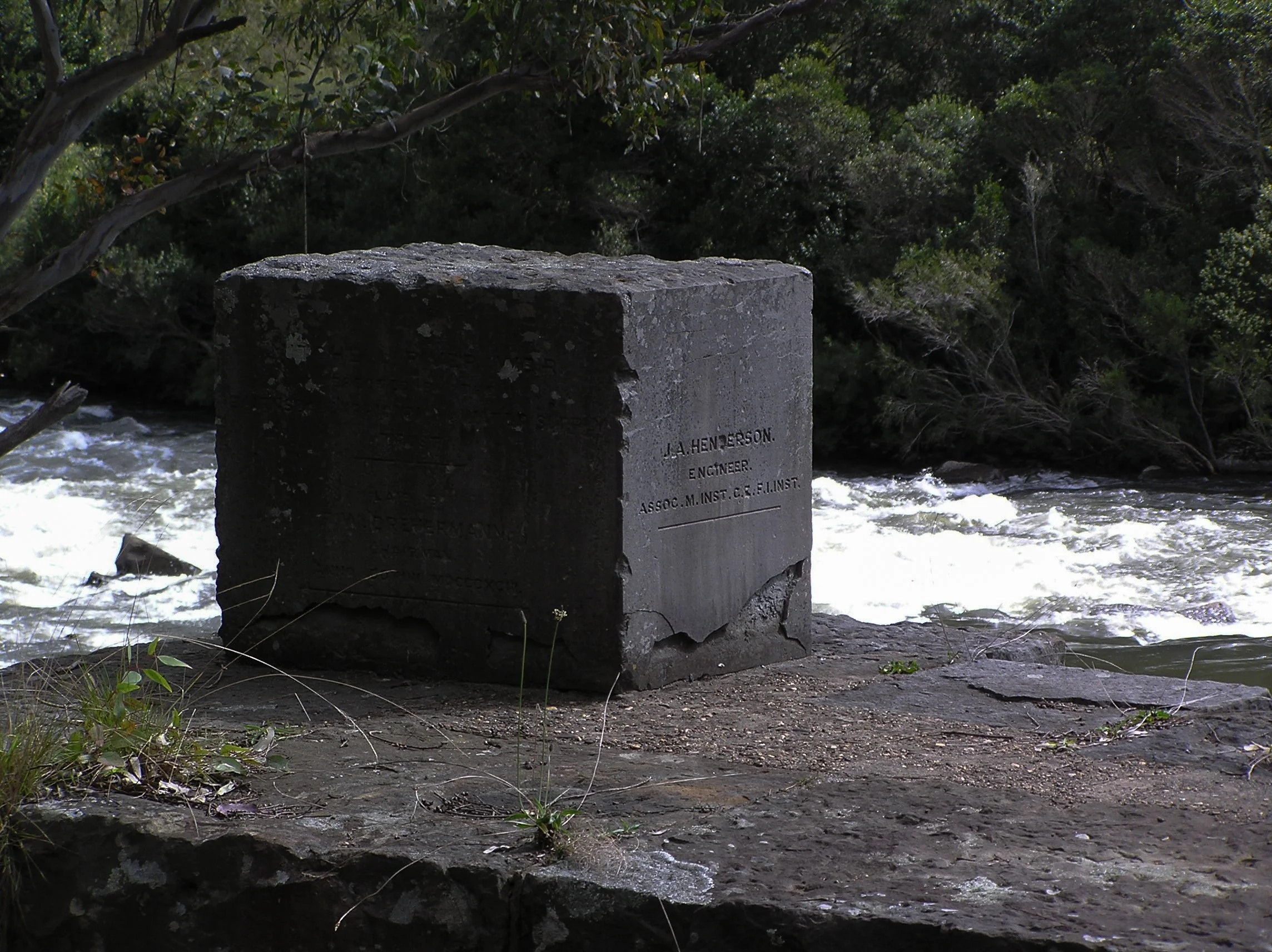
One block carries an inscription. As best I can read it, it says "J.A. Henderson, Engineer," followed by his membership of the Institution of Civil Engineers. The stone has worn away around some of the letters, which seems fitting for a weir that lost its argument with the river.
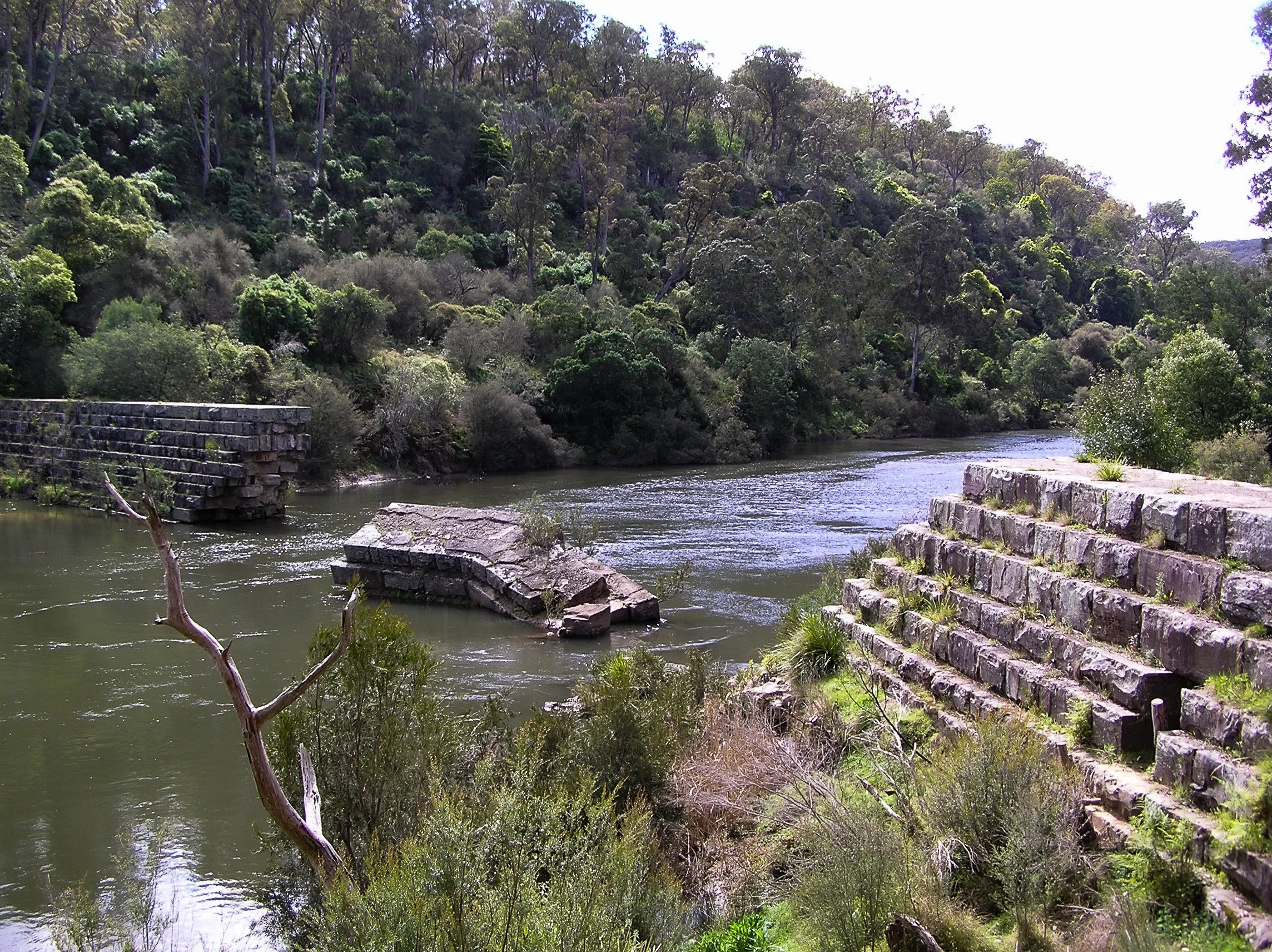
On my first visit I brought along my Olympus C-750 Ultra Zoom. It's the camera I bought when I first got into digital photography, and at around $800 it was a lot of money for what is a fairly basic camera. By today's standards it's terrible. But it has a great little lens and it produces nice files, and I still have it. I had my phone with me that day too.
March 2023: the phone
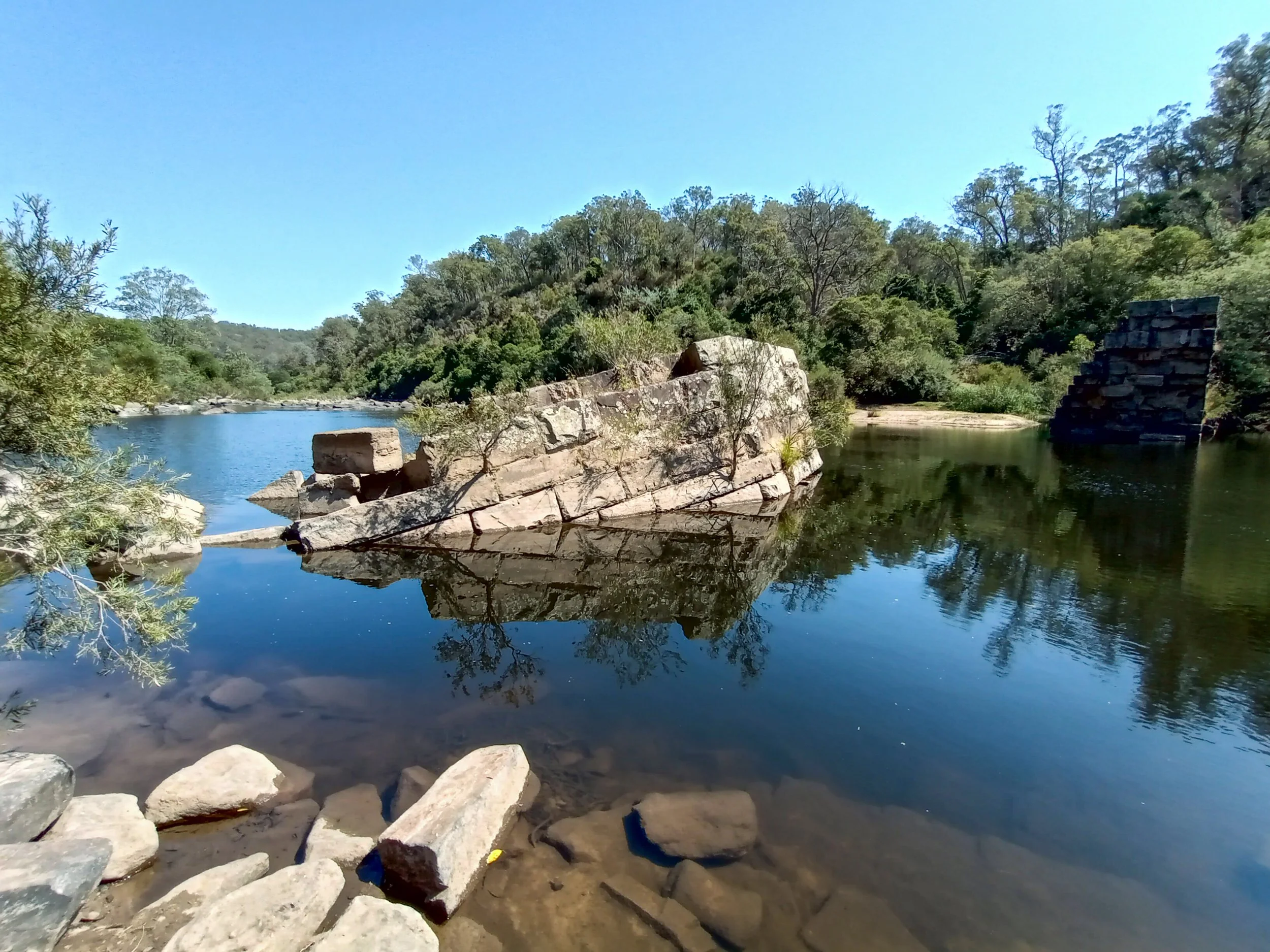
By March 2023 it was just the humble Moto g22. The river was low and still enough to see straight through to the riverbed, and the fallen slab of weir sat in its own reflection.
April 2026: the Canon 1100D, and an expensive splash
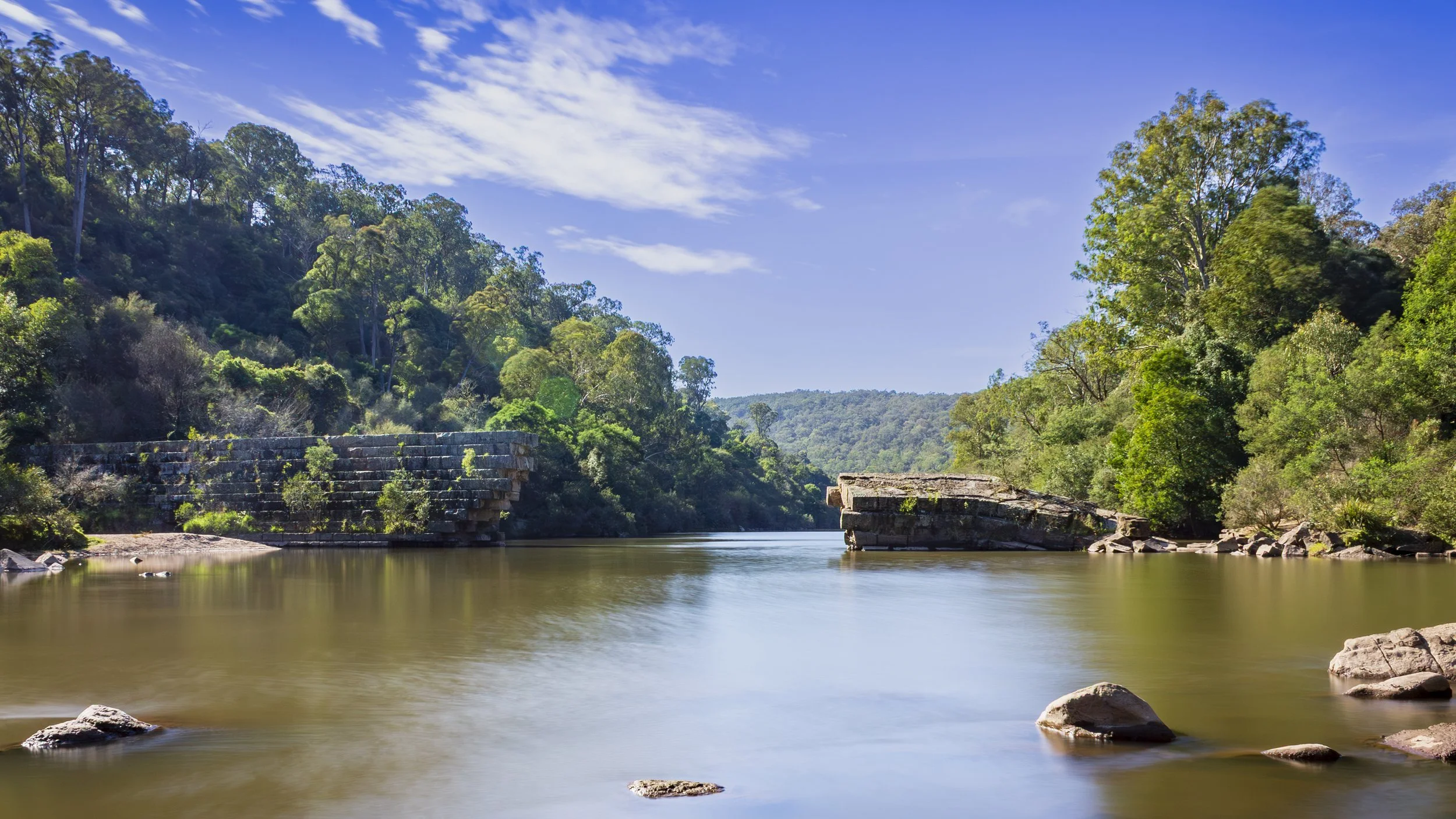
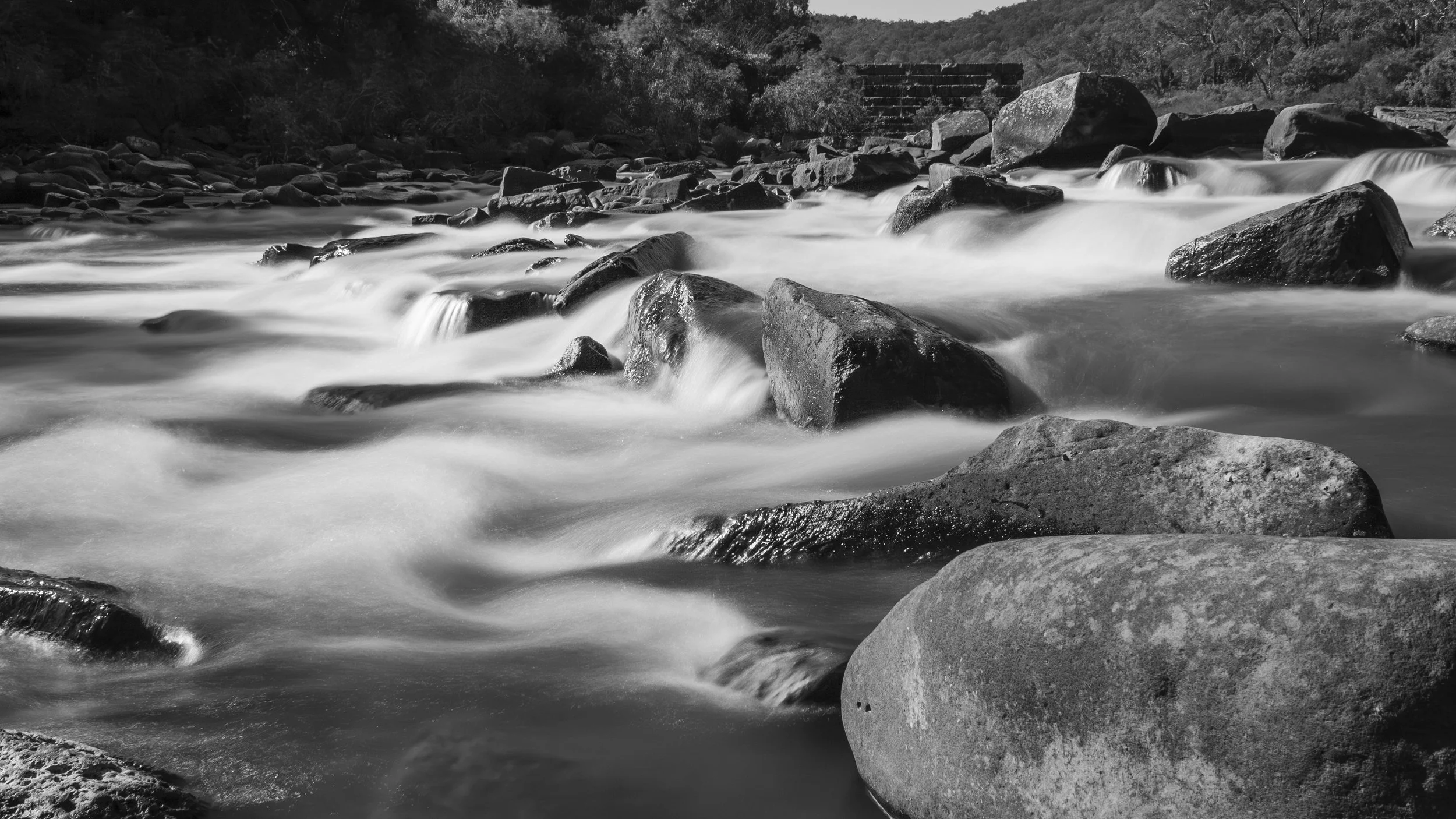
This year I came back with the Canon 1100D, the 18–55mm kit lens, a tripod and a 10-stop ND filter. Ten-second exposures in the middle of the day turned the water to glass. Partway through the session I knocked the filter off the end of the lens and watched it go into the river. I never got it back. One of these long exposures is the last photograph I took with it.
June 2026: the flood
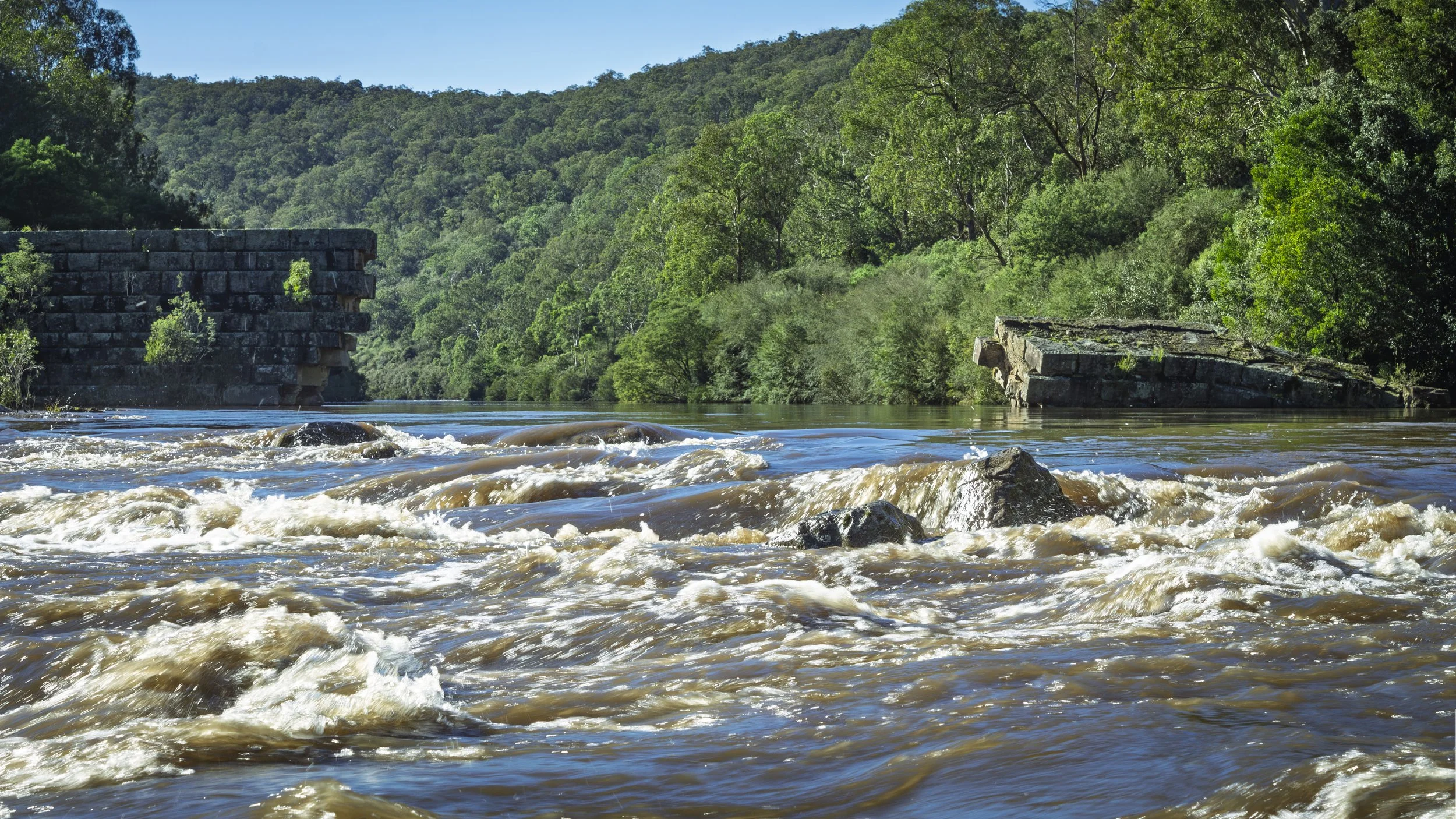
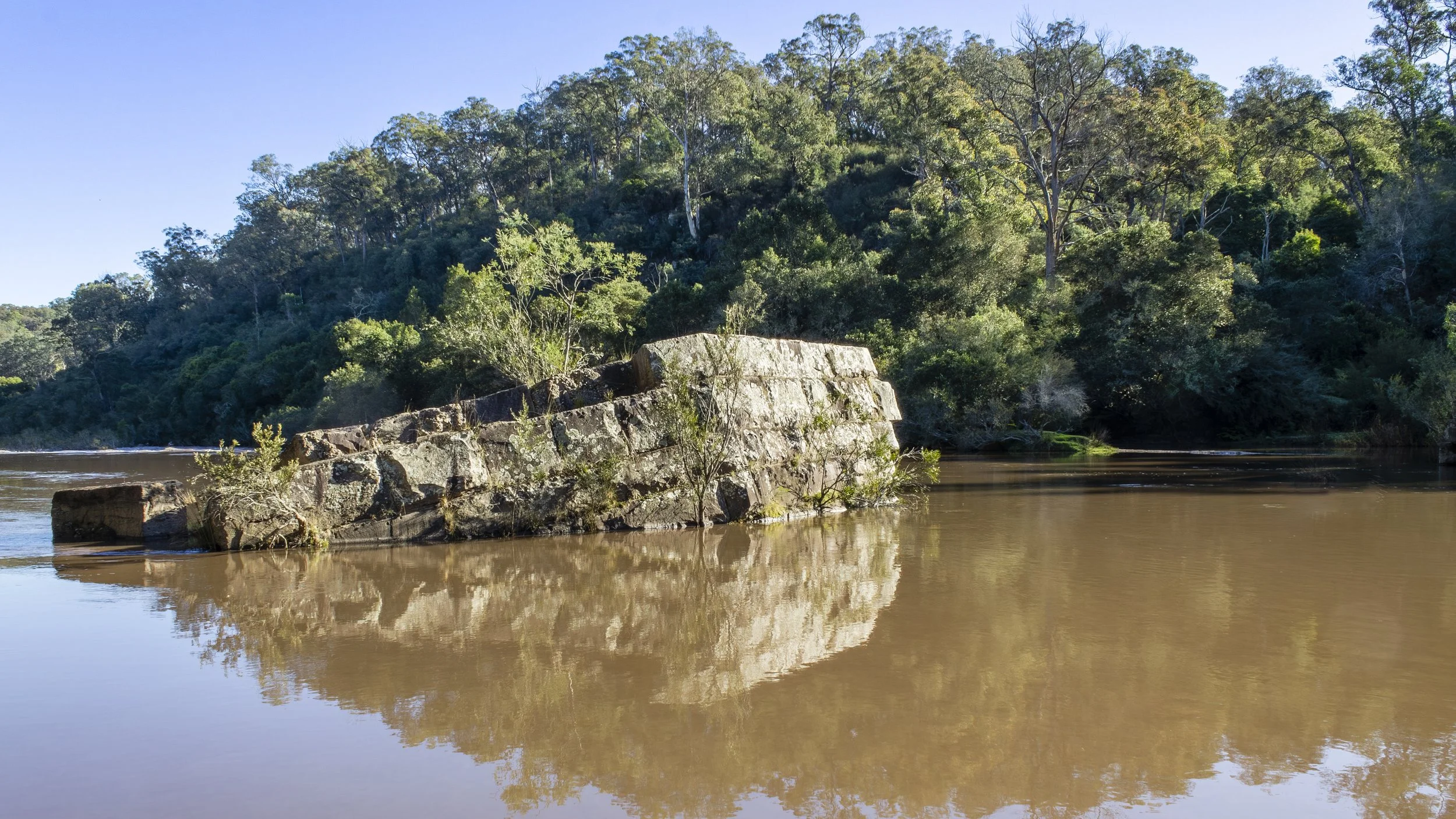
Eight weeks later the river was in minor flood. It wasn't dramatic as floods go, but it was enough to change the place completely. These were the same walls and the same slab, shot from almost the same spots, but the clear water had turned brown and the slab I'd photographed sitting high and dry now had the river pushing up around it. The weir was undone by floods more than 130 years ago, and the river is still working on what's left of it.
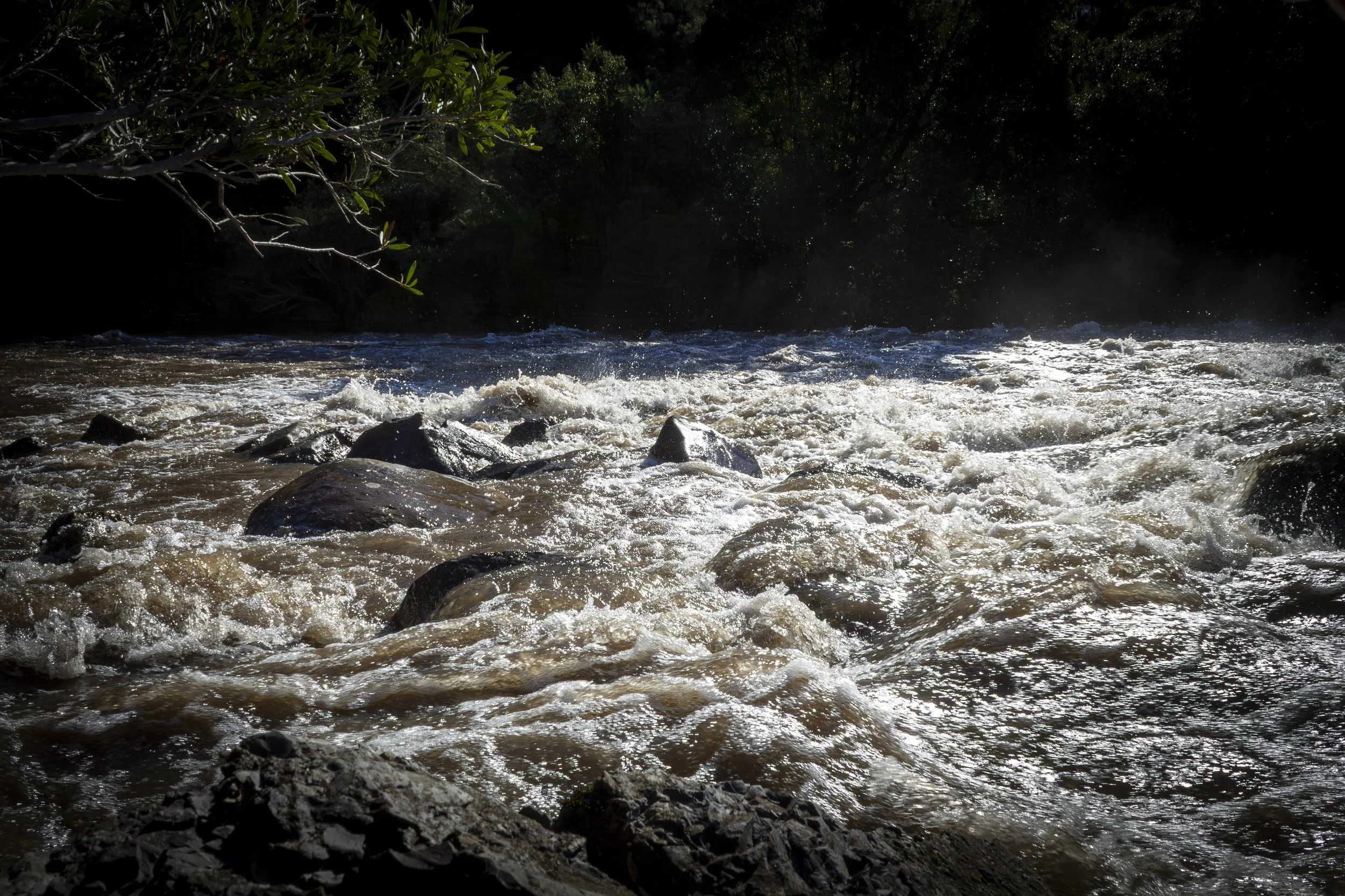
Putting these side by side, the river changed more than anything else. None of these cameras is new. The Olympus dates from 2003, and the Canon 1100D came out in 2011, which makes it ancient by camera standards. The Olympus and Moto files are nobody's idea of high quality, but they're still a record of a good day at a nice place. The better photographs have come from going back, and from learning what to do with the gear I've got, not from buying new gear. Somewhere at the bottom of the Mitchell there's a 10-stop ND filter that might agree.